Money Positioning System
Here at String Theory, we’ve been seeing an interesting pattern emerge with our users. They’ve started to think about money like coordinates on a grid, where they can ask really precise questions by thinking of them as intersections of a series of dimensions.
In this post, we’ll talk about what makes this possible and how you can leverage this kind of thinking in some revolutionary new ways to approach your money.
Groups vs Accounts
String Theory has a unique way of thinking about money. Instead tracking money as balances in a set of accounts, we track individual pieces of money and let you arrange them into “groups” instead.
Groups look and feel like accounts. You can deposit money into them, you can withdraw money from them, you can get a balance for a group, etc. All the things you can do with accounts, you can do with groups.
So what’s the difference?
Accounts are aggregations of money. Ultimately, the money itself is just a number summed into a balance. The money “lives” in that account, existing only as some portion of the balances and transactions that make it up.
Groups, however, are more like a tag on an individual piece of money. Instead of the money living inside the group, it’s just one way to describe or view that money. The important difference is that a single piece of money can be part of multiple groups at the same time.
This probably sounds weird at first, but what we’ve seen from our users is that it dramatically changes the way they think about money. We’ve seen a shift to treating groups almost like coordinates on a grid.
A grid by any other name
Let’s go through an example. Imagine that you run a business selling cookies. You are interested in understanding your December revenue by product and location. We’ll start by visualizing our revenue as individual sales, and then draw some lines to categorize our funds.
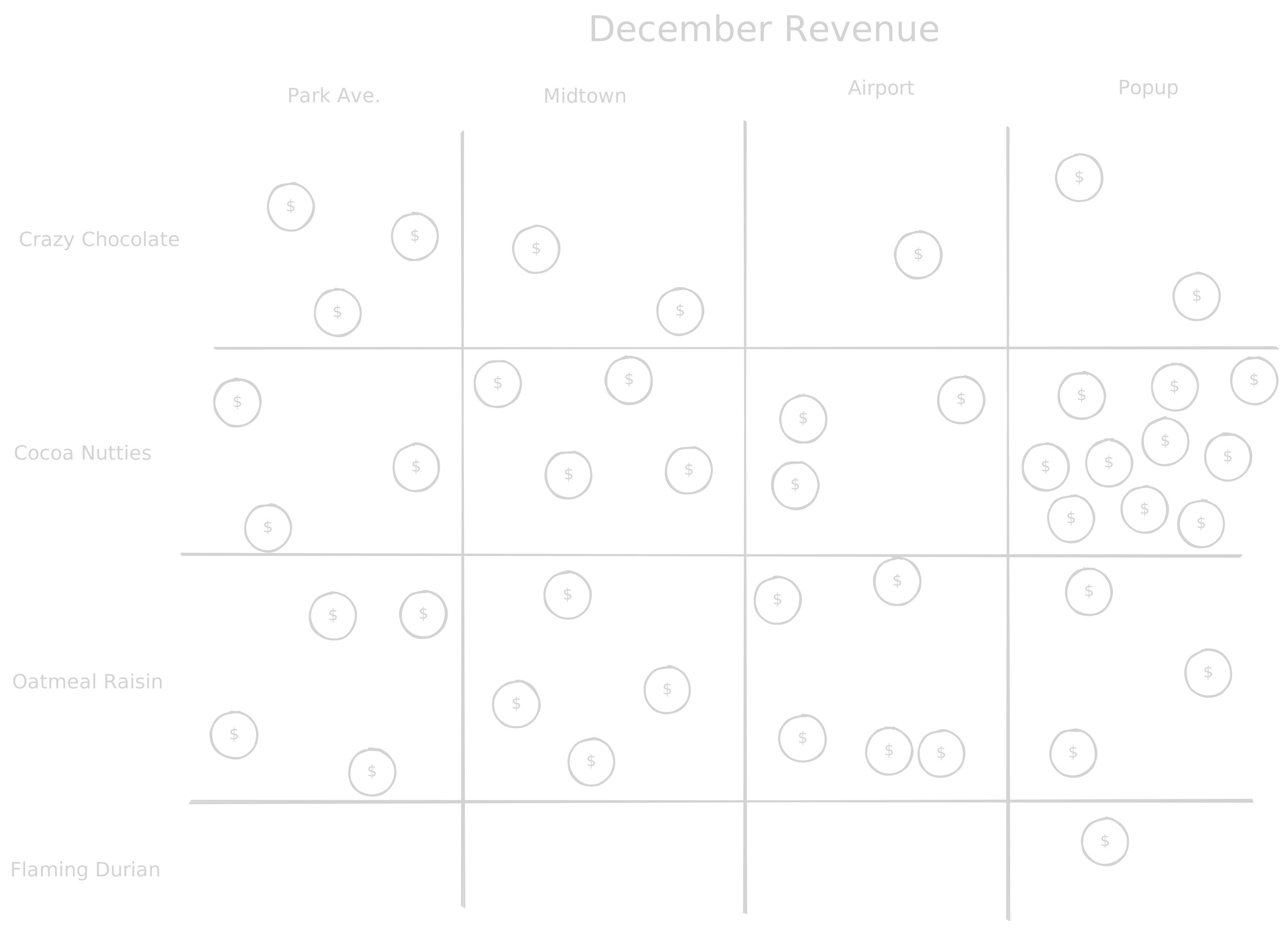
Now this is fairly complicated. We have 4 products and 4 locations. One product (the cocoa nutties) is seasonal, and one location (the popup) was a temporary event that won’t happen again. Location, product, and month are all groups that get added to money in your system.
Now let’s start by asking a very precise question. How much revenue did I make from cocoa nutties at the popup?
We’ll structure our question like a series of coordinates. On the December Revenue grid, we want to find the intersection of the cocoa nutties product and the popup location. Written out that might look something like: [december, cocoa nutties, popup].
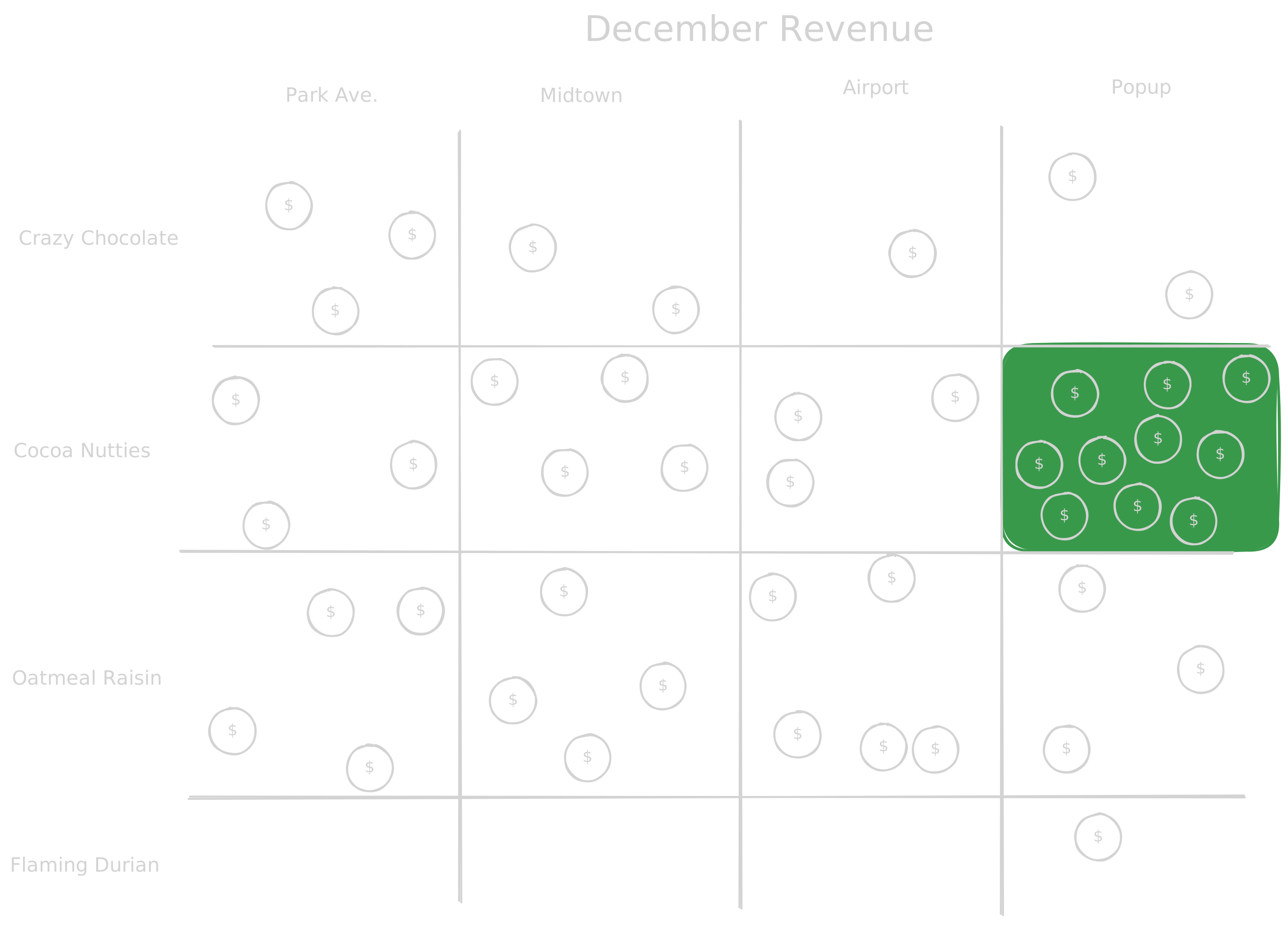
It’s pretty straightforward to envision this, isn’t it? No chart of accounts needed. It doesn’t matter if they paid cash or by credit card. You don’t need to care about the balance of an operating account or the individual transactions. You just think about the characteristics of the money itself.
A bigger question
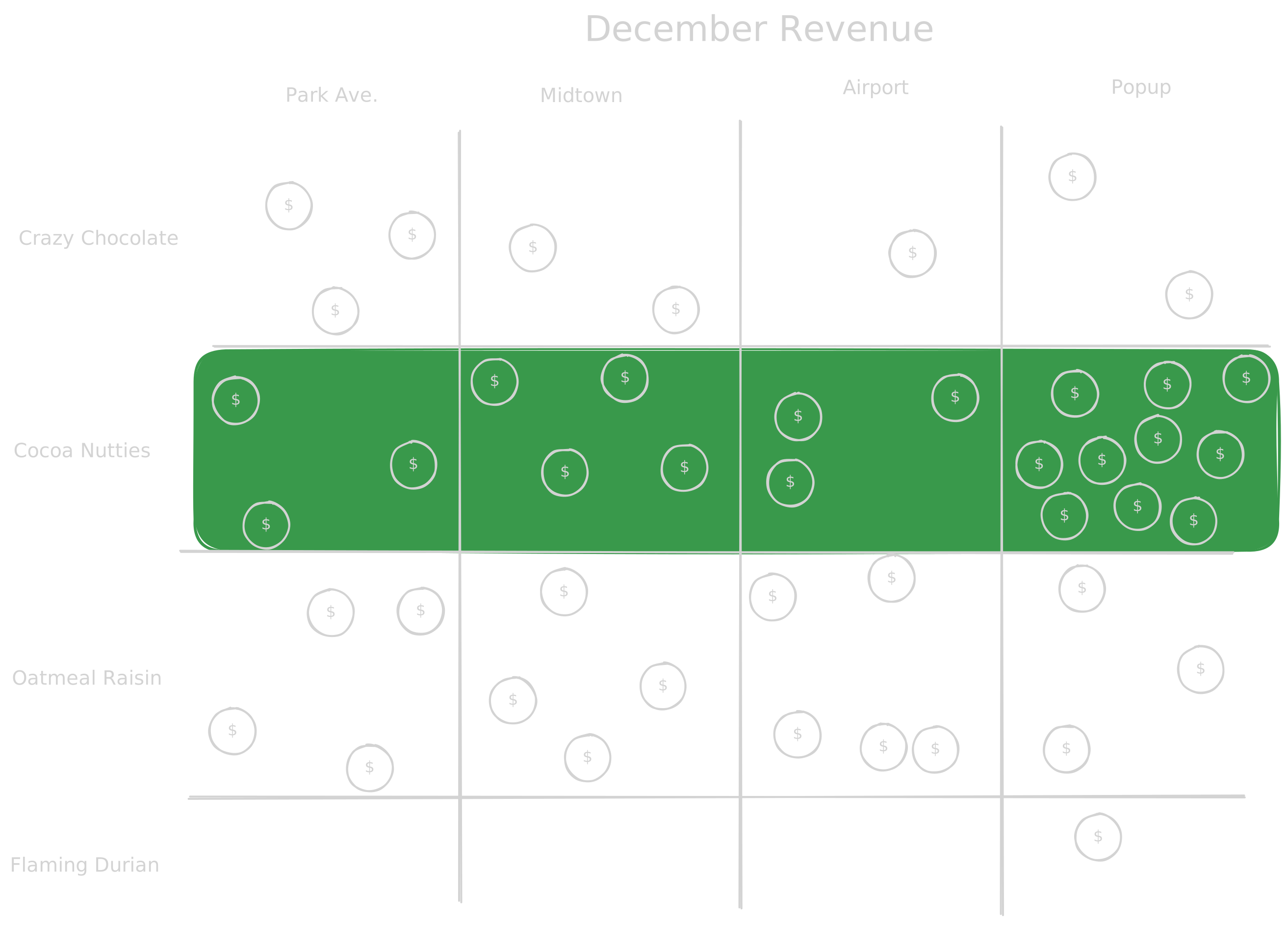
OK, this seems to work pretty well for a very precise question, but what about a more general one? What if we want to know how much revenue our seasonal product, cocoa nutties, made in December?
Here we can still think of this as coordinates, but we just need to be less precise. We’ll just have two coordinates in our set: [december, cocoa nutties].
A complicated question
Alright, now let’s try something really complicated. What if we wanted to know how much was made from our permanent locations from non-seasonal products in December? Now what we’ll want is a series of coordinates.
[december, park ave, crazy chocolate][december, midtown, crazy chocolate][december, airport, crazy chocolate][december, park ave, oatmeal raisin][december, midtown, oatmeal raisin][december, airport, oatmeal raisin][december, park ave, flaming durian][december, midtown, flaming durian][december, airport, flaming durian]
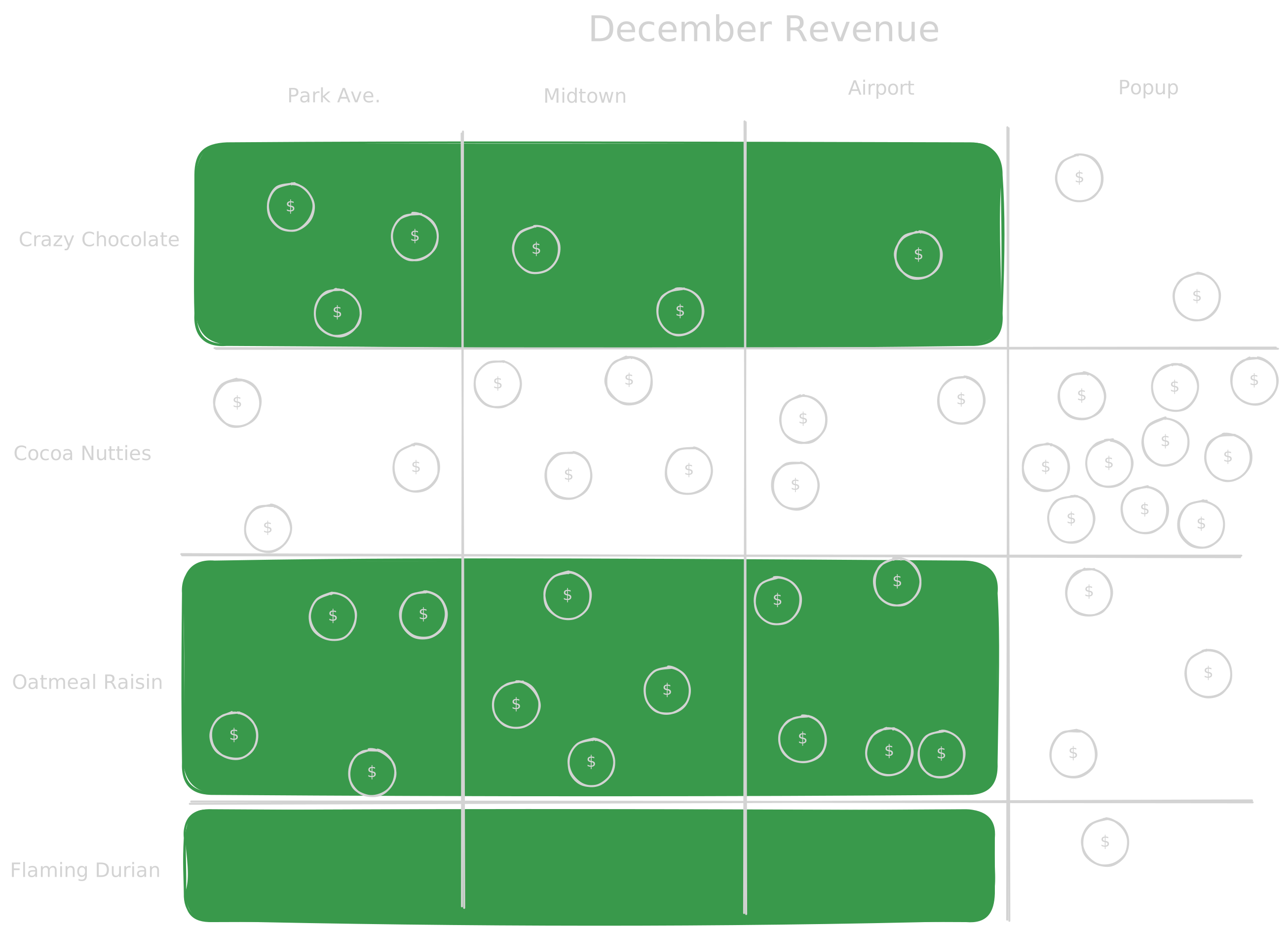
This is pretty cool, right? We can now ask really complicated questions that look at a combination of very specific revenue!
It is kinda bulky though. There are 9 sets of coordinates and 27 individual groups to think about. If we want to ask about non-seasonal products from permanent locations regularly, this would be a lot to remember.
When in doubt, just add more
Part of the beauty of groups is that, unlike accounts, they aren’t exclusive. If we want to easily ask about non-seasonal products from permanent locations, we can just add a new group for that. The plan is relatively straightforward: we’ll add a “non-seasonal” group to crazy chocolate, oatmeal raisin, and flaming durian. Then we’ll add a “permanent” group to park ave, midtown, and airport. Now our coordinates get much simpler: [december, non-seasonal, permanent].
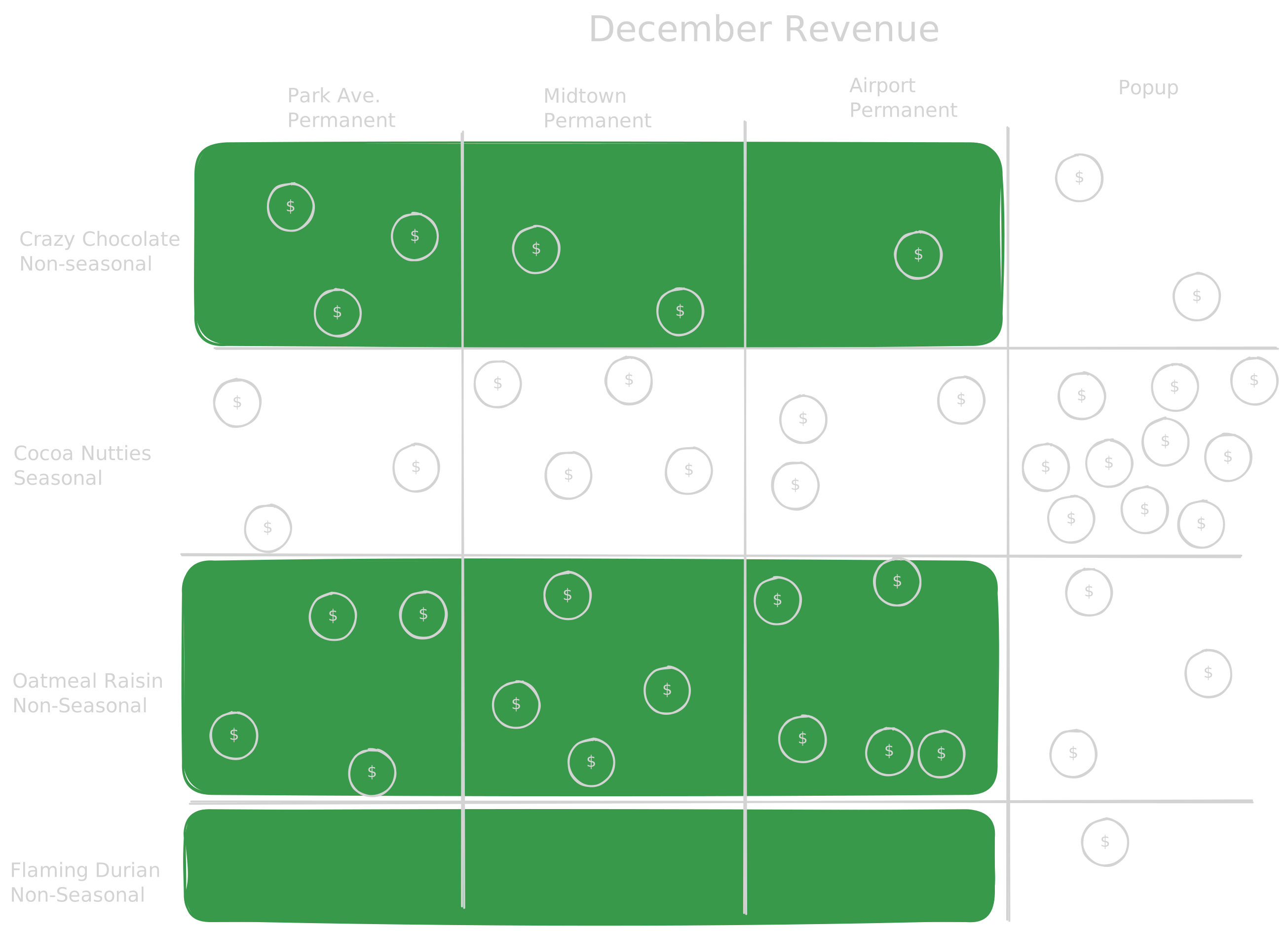
You’ll notice that we’re still looking at the exact same chart, but now we can ask about non-seasonal products from permanent locations in a much simpler way. The money doesn’t need to be moved around, and it doesn’t change our ability to ask more precise questions at all. We still have all the same information and all the same dimensions that we always did; we just added a new group to the mix.
Adding new groups is never destructive. It doesn’t impact the money itself, or mess with how other people interact with the money.
That means even if the grid you envision for how you think about this money is completely different from how other areas of your company think about it, that’s perfectly fine. Each of you can have your own grid without impacting the money itself or anyone else.
It also means you don’t have to have any of these groups figured out up front. Since it’s trivial to add new groups to existing money you can start simple and then get as complex as you need to.
The sky is the limit
You can easily imagine we could add another dimension to the grid like “day of the week” and be able to visualize this as a cube.
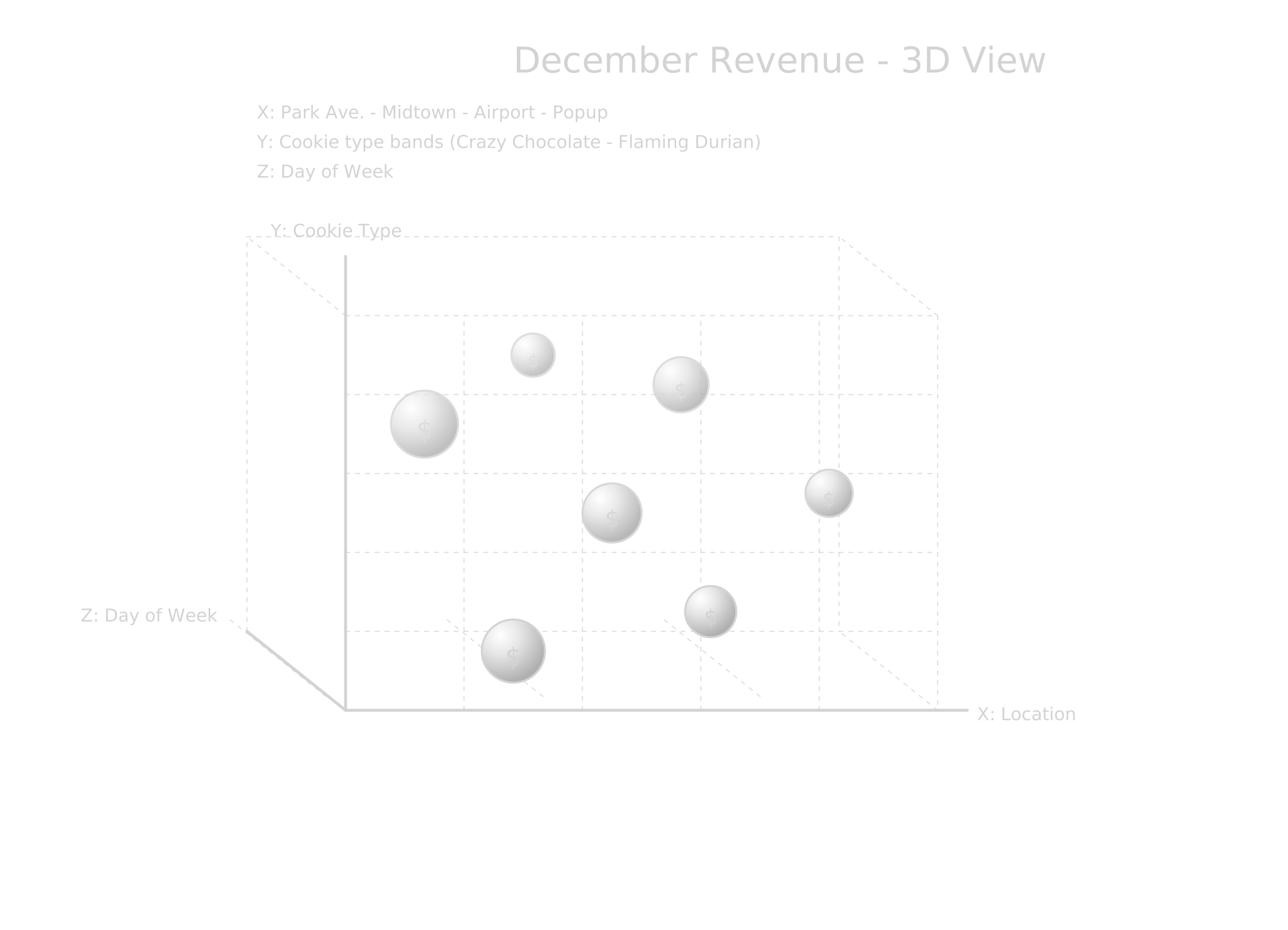
It doesn’t stop with just 3 dimensions, though! Groups are extremely powerful and practically unlimited. For example, let’s say you need to know how much money you paid to the IRS in payroll taxes for tax year 2025 for just one of your employees, but only for overtime pay and the month of December. You could build up a query like [tax_year_2025, december, john, overtime, payroll_taxes, irs].
An individual piece of money can have dozens of groups, and we commonly see customers query for 10-20 groups’ worth of coordinates at a time.
Groups also aren’t just an analytic tool, these intersections can be used in real time to verify balances, stop overdrafts, or just very precisely target money for specific purposes.
Conclusion
Groups are a unique and powerful tool that allows you to think about money like grid coordinates. Better yet, since groups don’t conflict with each other each part of your company can use the coordinate that make sense to them without impacting anyone else.
What would decoupled processing and incredibly precise analytics enable for your business?
Ready to revolutionize your financial systems?
String Theory is the only ledger system that allows you to think about money like coordinates.